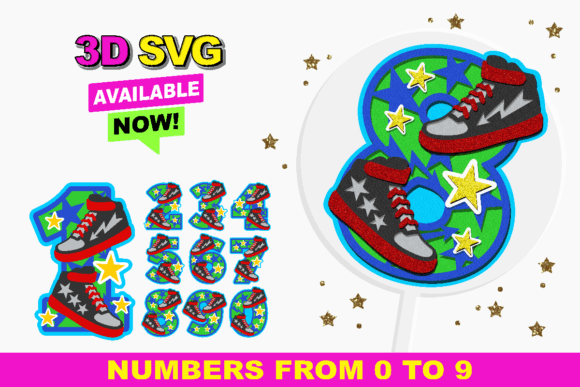
Review: Sneakers Numbers 3D SVG for Embroidery
As a designer who has spent years translating digital vectors into thread, I have learned that not every file labeled "easy to cut" translates seamlessly to the embroidery hoop. When I first opened the Sneakers Numbers 3D SVG collection, my initial reaction was one of cautious optimism. The aesthetic is undeniably modern, tapping into the streetwear and athletic vibe that dominates current fashion trends. However, moving from a vector graphic on a screen to a tactile machine embroidery design requires a critical eye for detail, density, and fabric compatibility.
This review breaks down how these numbers perform in real-world scenarios, specifically for those of us running small shops, creating personalized gifts, or managing commercial embroidery workflows. The goal is to determine if this asset belongs in your active library or if it requires significant modification before it is ready for prime time.
First Impressions: A Bold, Athletic Aesthetic
The visual personality of the Sneakers Numbers 3D SVG is distinct. These are not delicate, serif fonts suitable for traditional monograms. They are bold, blocky, and designed with a sense of depth that mimics the layered materials found on high-end athletic footwear. This "3D" effect is achieved through clever layering in the vector file, which is categorized under Shapes. For an embroidery designer, this suggests a need for careful planning regarding stitch types.
The mood here is energetic and youthful. It feels right at home on a gym bag, a varsity jacket, or a modern nursery item for a sports-loving family. The clean lines suggest that, if digitized correctly, these numbers could offer excellent stitching clarity. However, the complexity of the "3D" illusion means we must be wary of excessive stitch density. If the layers are too close together, the needle may perforate the fabric, leading to a stiff, cardboard-like finish rather than a soft, premium feel.
Real-World Application: The Custom Sweatshirt Test
To truly evaluate the utility of this digital embroidery file, I envisioned a specific project: a custom sweatshirt embroidery order for a local basketball team. The client wanted large, visible numbers on the back of heavyweight cotton fleece. This is where the Sneakers Numbers 3D SVG shines. The bold shapes hold up well against the textured surface of fleece, ensuring the numbers remain legible from a distance.
In this scenario, the design acts as a strong focal point. Unlike intricate applique design work that might get lost in the pile of the fabric, these solid shapes provide a crisp contrast. When stitched using a combination of fill stitch for the main body and satin stitch for the borders, the numbers pop. The result is a professional-looking finished product that justifies a higher price point for the Etsy seller or boutique owner. It transforms a basic garment into a piece of custom apparel with perceived value.
Beyond apparel, I considered these numbers for a tote bag design. Canvas is a forgiving medium for bold graphics. Here, the 3D effect adds a nice tactile dimension that customers appreciate when handling a handmade product. It elevates the item from a simple grocery carrier to a stylish accessory, perfect for small shop product lines targeting students or fitness enthusiasts.
Navigating Technical Challenges and Fabric Constraints
While the design is versatile, it is not without its pitfalls. Experience dictates that we approach certain fabrics with caution. For instance, using these numbers on thin or stretchy fabrics like jersey knits for baby embroidery requires robust stabilization. The weight of the stitches, particularly if the 3D effect involves multiple layers, can cause lightweight fabric to pucker or warp. In such cases, a cut-away stabilizer is non-negotiable to maintain the integrity of the embroidery project.
Another consideration is the hoop size. While the numbers 0-9 are included in the zipped folder, their scalability is key. If you attempt to shrink them too much for a small embroidered patch or a cap brim, the details may merge. Tiny corners and tight curves in the 3D styling can become cluttered with thread, losing the crisp definition seen in the preview. I recommend testing various sizes on scrap fabric to find the minimum viable dimension for your specific machine and thread combination.
Dark fabrics present another challenge. The 3D effect often relies on subtle shading or overlapping layers. On black or navy fabric, using dark threads might obscure the depth. To counter this, consider using contrasting thread colors or incorporating a light-colored underlay to make the design stand out. This is crucial for maintaining visual appeal and ensuring the design does not look like a flat, muddy blob.
Enhancing Brand Value and Customer Trust
For craft business owners, consistency is king. The Sneakers Numbers 3D SVG offers a cohesive look that can help build brand recognition. If your shop specializes in modern, sporty, or urban styles, these numbers fit seamlessly into your design assets. They allow for quick customization, which is essential for meeting tight deadlines during peak seasons like holiday embroidery or back-to-school rushes.
Furthermore, the professionalism of the final stitch-out directly impacts customer trust. A clean, well-digitized number signals quality. It tells the buyer that attention was paid to detail, encouraging repeat business and positive reviews. Whether you are creating printable mockup images for your online store or stitching the actual item, the sharp lines of this design help create compelling visuals that drive engagement.
Practical Designer Notes for Best Results
Before committing to a full production run, adhere to these practical steps to ensure success with the Sneakers Numbers 3D SVG:
- Test on Scrap Fabric: Always stitch a sample on the same material you intend to use for the final product. This reveals issues with tension, density, and registration.
- Check Thread Contrast: Verify that your chosen thread colors provide enough contrast to highlight the 3D effect, especially on dark backgrounds.
- Review Stitch Density: If the file allows for editing, check the density settings. Reduce fill density slightly for softer fabrics to prevent stiffness.
- Confirm Hoop Size: Ensure the scaled design fits comfortably within your hoop, leaving adequate margin for stabilization.
- Inspect Small Details: Zoom in on the vector file to check for any anchor points or nodes that might cause stitching errors, particularly in the curved areas of the numbers.
- Verify Licensing: Since this is a 3D SVG intended for cutting and potentially embroidery, confirm the license terms. Ensure you are permitted to use the design for commercial embroidery and selling finished items if that is your business model.
In conclusion, the Sneakers Numbers 3D SVG is a strong contender for designers looking to add a modern, athletic edge to their portfolio. It performs exceptionally well on sturdy fabrics like canvas and fleece, making it ideal for tote bags, sweatshirts, and caps. While it requires careful handling on delicate materials and attention to stitch density, the potential for creating high-value, eye-catching personalized gifts and custom apparel is significant. With proper testing and stabilization, this design can become a reliable staple in your creative toolkit.