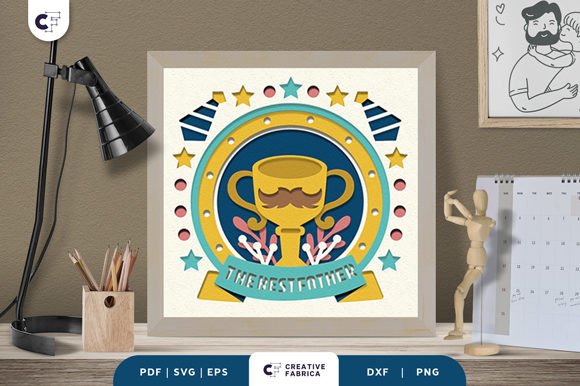
Reviewing the Happy Father’s Day Box Design
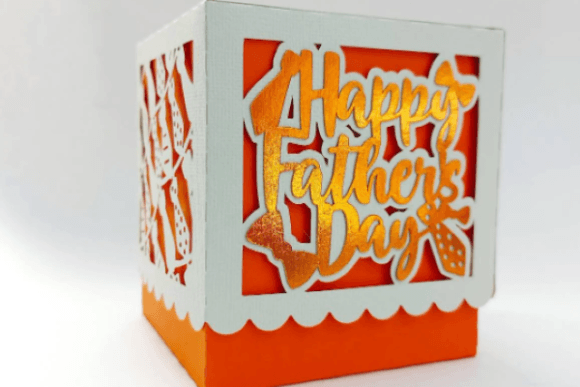
As an embroidery designer who has spent countless hours digitizing, testing, and stitching out files for clients, I approach every new machine embroidery design with a critical eye. It is not just about whether the image looks cute on a screen; it is about how that design translates to fabric, how it holds up after washing, and whether it adds genuine value to a finished product. Recently, I evaluated the Happy Father’s Day Box, a 3D SVG template created by Exodus 31 Designs. While my primary expertise lies in thread and needle, understanding the structural integrity of a 3D box design is crucial when considering how it might be adapted or presented in mixed-media craft projects.
The first impression of this design is one of structured charm. The concept of a "box" implies depth and dimension, which is a refreshing departure from the flat, two-dimensional graphics we often see in holiday-themed collections. For Father’s Day, a holiday that frequently leans toward traditional motifs like ties, tools, or grills, this design offers a softer, more gift-oriented aesthetic. It suggests appreciation and care, making it an ideal candidate for personalized gifts rather than just generic apparel. When I visualize this embroidery project, I do not immediately see it on a heavy work shirt. Instead, I see it as part of a curated gift presentation—perhaps stitched onto a tote bag holding other presents, or as a decorative element on a keepsake pillow cover.
Real-World Application and Fabric Considerations
To truly understand the viability of the Happy Father’s Day Box, I mentally placed it into several real-life production scenarios. Let us consider a custom embroidered tote bag. Tote bags are staple items for Etsy sellers and small shop owners, especially during holiday seasons. The box design, with its defined edges and potential for internal detailing, would need careful handling regarding stitch density. If the design relies heavily on fill stitches to create the illusion of a solid box, it could pull on lighter canvas fabrics. In such cases, using a cut-away stabilizer is non-negotiable to maintain the shape of the "box" and prevent distortion over time.
Another practical application is sweatshirt embroidery. A crewneck sweatshirt provides a stable, thick surface that can handle higher stitch counts. Here, the Happy Father’s Day Box could serve as a central chest graphic. However, because it is a 3D SVG template originally intended for paper crafting or digital layering, translating this into thread requires a keen eye for contrast. I would recommend using satin stitch borders to define the edges of the box sharply against the fleece background. This technique helps the design pop and ensures that the "box" does not look like a blurry blob from a distance. For baby embroidery, such as on a onesie or a burp cloth, the scale becomes critical. The details must be large enough to stitch cleanly without becoming a tangled mess of thread breaks.
When thinking about commercial embroidery, versatility is key. This design fits well into the category of holiday embroidery that appeals to a broad audience. It is not overly masculine or feminine, which makes it a safe bet for stock inventory. For an embroidered patch, the design would need to be simplified. Patches require bold lines and minimal fine detail to withstand wear and tear. If the original SVG contains intricate patterns inside the box, those might need to be removed or thickened significantly before digitizing for a patch application.
Navigating Technical Challenges
While the aesthetic appeal is strong, there are technical areas where caution is necessary. The term "3D SVG" indicates a digital file structure that creates depth through layers. In embroidery, we simulate depth through thread color changes and stitch types, not actual physical layers. Therefore, if you are adapting this concept for machine use, you must be mindful of curved surfaces. Stitching a box design on a cap is risky. The curvature of the crown can distort straight lines, making the box look warped. If you must use it on headwear, keep the design small and centered, and avoid placing it too close to the seams where the fabric tension varies.
Thin fabric is another enemy of detailed box designs. If you are stitching this on a tea towel or a lightweight apron, the density of the stitches can cause puckering. I always advise testing the design on scrap fabric first. This simple step saves hours of frustration. Check the thread color contrast meticulously. A box design relies on shadows and highlights to appear three-dimensional. If your thread colors are too similar, the effect will be lost. Use a darker shade for the sides and a lighter shade for the top to mimic lighting. Additionally, inspect small details. If the design includes tiny text or intricate icons within the box, ensure they are above the minimum stitch length for your machine to prevent bird nesting.
Dark fabric presents its own set of challenges. If you are stitching a light-colored box on a black sweatshirt, you may need an underlay of white thread to prevent the dark fabric from showing through the stitches. This adds bulk, so adjust your pull compensation settings accordingly. For layered garments, such as a jacket with lining, ensure your hoop size is appropriate and that the layers do not shift during stitching. Using a temporary spray adhesive on the stabilizer can help keep everything in place.
Enhancing Product Value and Brand Consistency
From a business perspective, the Happy Father’s Day Box has the potential to elevate the perceived value of a handmade product. Customers associate clean, well-executed embroidery with quality. When a design looks professional, it builds trust. For an Etsy seller, this means better reviews and repeat customers. The design’s theme of "love and appreciation" aligns perfectly with the emotional driver behind gift purchases. It is not just a decoration; it is a message. This emotional connection can justify a higher price point for custom apparel or personalized gifts.
Brand consistency is also important. If your shop specializes in modern, minimalist designs, ensure that this box design fits that aesthetic. You might need to simplify the elements or choose a monochromatic thread palette. For boutique branding, consider how the design looks in printable mockups. A high-quality digital preview can significantly boost buyer engagement. Show the design on various products—tote bags, pillows, and shirts—to help customers visualize the final result. This reduces hesitation and increases conversion rates.
Practical Notes for Designers and Makers
Before you commit to producing this design for sale or personal use, there are several practical steps to take. First, confirm the licensing terms. Exodus 31 Designs may have specific rules regarding commercial use of their SVG templates. Even if you are digitizing it yourself for embroidery, ensure you have the right to sell the finished items. Second, check the file formats. If you are working with an SVG, you will need to convert it into an embroidery file format compatible with your machine, such as PES, DST, or EXP. This conversion process is not automatic; it requires manual digitizing to assign stitch types and paths.
Test the design in black and white mockups to evaluate contrast without the distraction of color. This helps you identify areas where the definition might be weak. Compare light and dark fabric backgrounds to determine the best thread combinations. Use proper stabilizer for each fabric type—cut-away for knits, tear-away for wovens. Finally, consider the washability. If the product is a kitchen towel or a baby item that will be washed frequently, ensure the stitches are secure and the fabric can handle the tension. A well-tested design results in a durable finished product that customers will cherish for years.
In conclusion, the Happy Father’s Day Box is a versatile and emotionally resonant design concept. With careful attention to technical details and thoughtful application, it can become a standout piece in your holiday collection. Whether you are a hobbyist making a gift for dad or a craft business owner stocking up for the season, this design offers a sweet spot of creativity and commercial appeal. Just remember: the success of any embroidery project lies in the preparation, testing, and execution. Take the time to get it right, and the results will speak for themselves.